Eye care has come a long way in recent years. With today’s advanced technology, we can detect potential vision problems long before symptoms appear. One of the biggest breakthroughs in this area is the OCT eye test, a revolutionary scan that lets opticians see what’s really happening beneath the surface of your eyes.
While traditional eye exams are still the foundation of good vision care, adding OCT testing for eyes gives your optician a much deeper understanding of your overall eye health. So, what exactly is an OCT eye test, and how does it compare to a regular eye exam? Let’s take a closer look.
The OCT eye test (Optical Coherence Tomography) is an advanced, non-invasive imaging technique that takes highly detailed 3D pictures of your retina, the delicate layer at the back of your eye responsible for detecting light and colour.
Unlike standard tests that focus mainly on your prescription or visible eye health, the OCT test for the eye allows your optician to look deeper, right down to the microscopic layers of your retina and optic nerve.
This makes it invaluable for detecting early signs of conditions such as:
Essentially, an eye OCT test acts like an early warning system, catching problems before they cause noticeable changes to your vision.
A traditional eye exam remains an important part of maintaining healthy vision. During a typical appointment, your optician will:
These checks are excellent for identifying refractive errors like short-sightedness or astigmatism. However, they can only reveal what’s visible on the surface. That’s where the eye exam OCT test steps in, adding a whole new dimension to your eye health assessment.
Although both tests are essential, they serve very different purposes. A traditional eye exam focuses on how well you can see and whether you need glasses or contact lenses. It also gives a general overview of your eye health.
On the other hand, an OCT eye test uses light waves to scan beneath the surface of your eye, providing a detailed, 3D cross-section of your retina and optic nerve. It can detect microscopic changes that aren’t visible during a standard exam, often years before symptoms develop.
Both tests are quick, comfortable, and non-invasive, but together, they give a complete picture of your vision and eye health.
The beauty of OCT testing for eyes lies in its ability to spot issues early, sometimes before you even realise something’s wrong. Conditions like glaucoma and macular degeneration often develop slowly and painlessly, making them easy to miss in their early stages.
By incorporating OCT testing into your routine check-ups, your optician can:
For anyone over 40, diabetic patients, or those with a family history of eye conditions, an OCT test for the eyes is one of the best ways to protect your sight long-term.
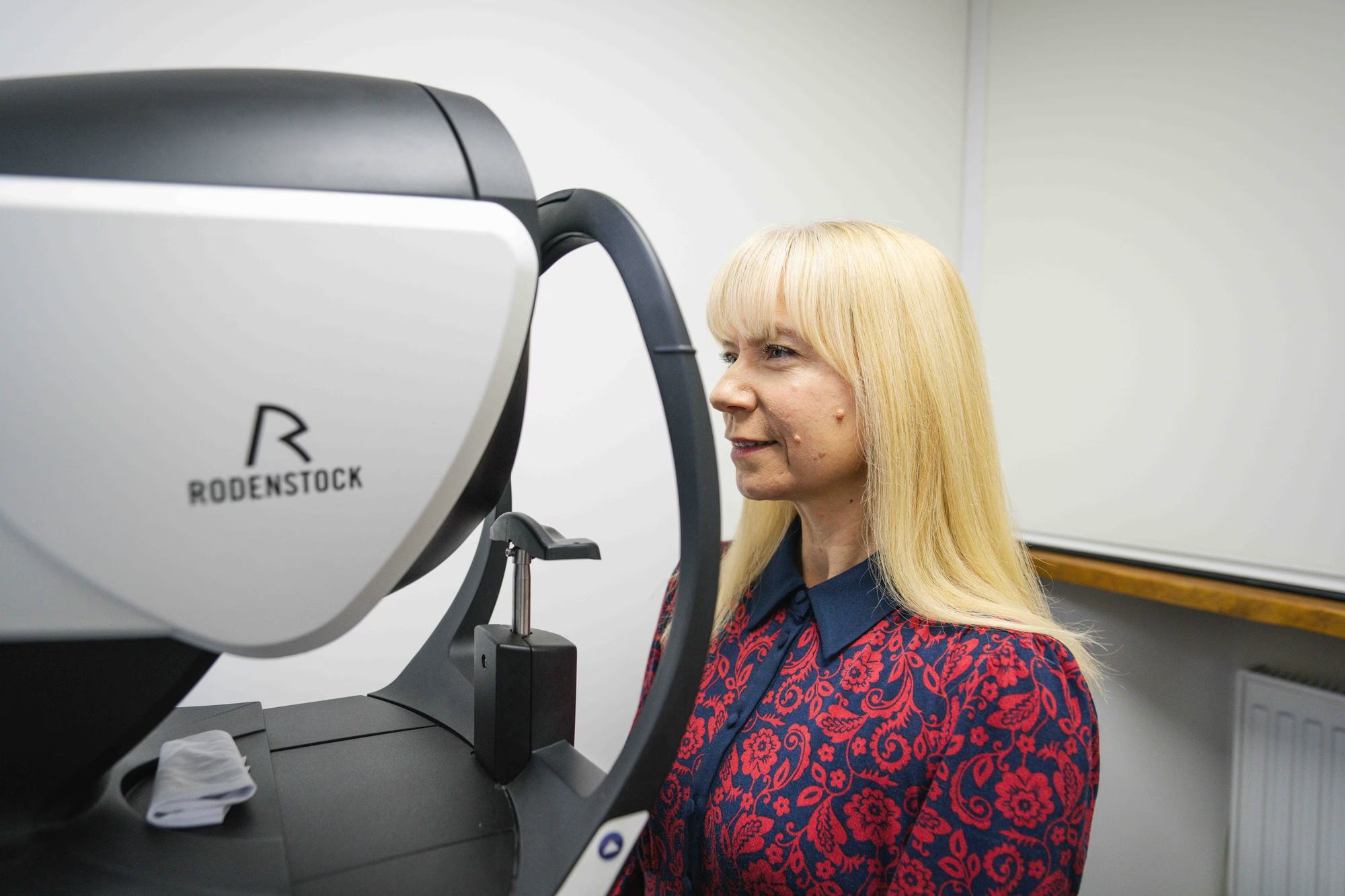
An OCT eye test is fast, comfortable, and completely painless. Here’s what typically happens: You’ll sit at the OCT scanner and rest your chin on a small support. The machine then uses harmless light waves to capture images of the inside of your eye, no drops or contact required. The whole process takes just a few minutes per eye, and your optician can show you the results immediately.
You’ll be able to return to your normal activities right away, making it one of the easiest yet most insightful tests in modern eye care.
An OCT eye test is beneficial for almost everyone, but it’s especially important for:
Even if you think your eyesight is fine, an OCT eye test can uncover hidden changes that might otherwise go undetected.
When used together, a traditional eye exam and an OCT eye test give you the most thorough and accurate picture of your vision and eye health. The traditional test ensures your prescription and surface health are up to date, while the OCT scan looks deeper to catch any early signs of disease.
By combining both, your optician can diagnose potential issues sooner, develop more effective treatment plans, and give you peace of mind that your eyes are being cared for in the best possible way.
The OCT eye test is transforming how we understand and protect our eyes. While traditional eye exams remain vital, adding OCT testing for eyes gives your optician a much clearer view of your eye health, often spotting potential issues years before you notice any symptoms.
At Richard Fantom Eyecare, we combine expert care with the latest OCT test for eyes technology to help you protect your sight for the future.
Book your OCT eye test today or get in touch with our friendly opticians to learn more about how we can help keep your eyes healthy for years to come. Contact Richard Fantom Eyecare because your vision deserves nothing less than the best.