Most parents can reel off the milestones: first steps, first words, first day at school. Vision rarely makes that list, yet it underpins almost everything on it. A child who can't see the whiteboard clearly, or who is quietly straining to focus on a picture book, often has no idea that anything is wrong. To them, blurred or uncomfortable vision simply feels normal, because it's the only version of "seeing" they've ever known.
That's exactly why children's eye tests matter so much, and why they shouldn't wait for a problem to become obvious.
Vision develops rapidly in the first years of life, and it plays a direct role in how children learn to read, write, catch a ball, or simply judge the distance to the next step. Problems such as long-sightedness, short-sightedness, astigmatism, or a squint (where the eyes don't quite line up together) are far easier to manage the earlier they're picked up.
Left unaddressed, some of these conditions can affect how a child's vision develops long-term, sometimes leading to lazy eye (amblyopia), where the brain starts to favour one eye over the other. Caught early, many of these issues can be corrected with glasses, patching, or monitoring, often with excellent results. Caught late, the options narrow.
There's also the everyday impact to consider. Children who are struggling to see clearly can be mistaken for having behavioural or learning difficulties when the real issue is sitting right in front of their eyes.
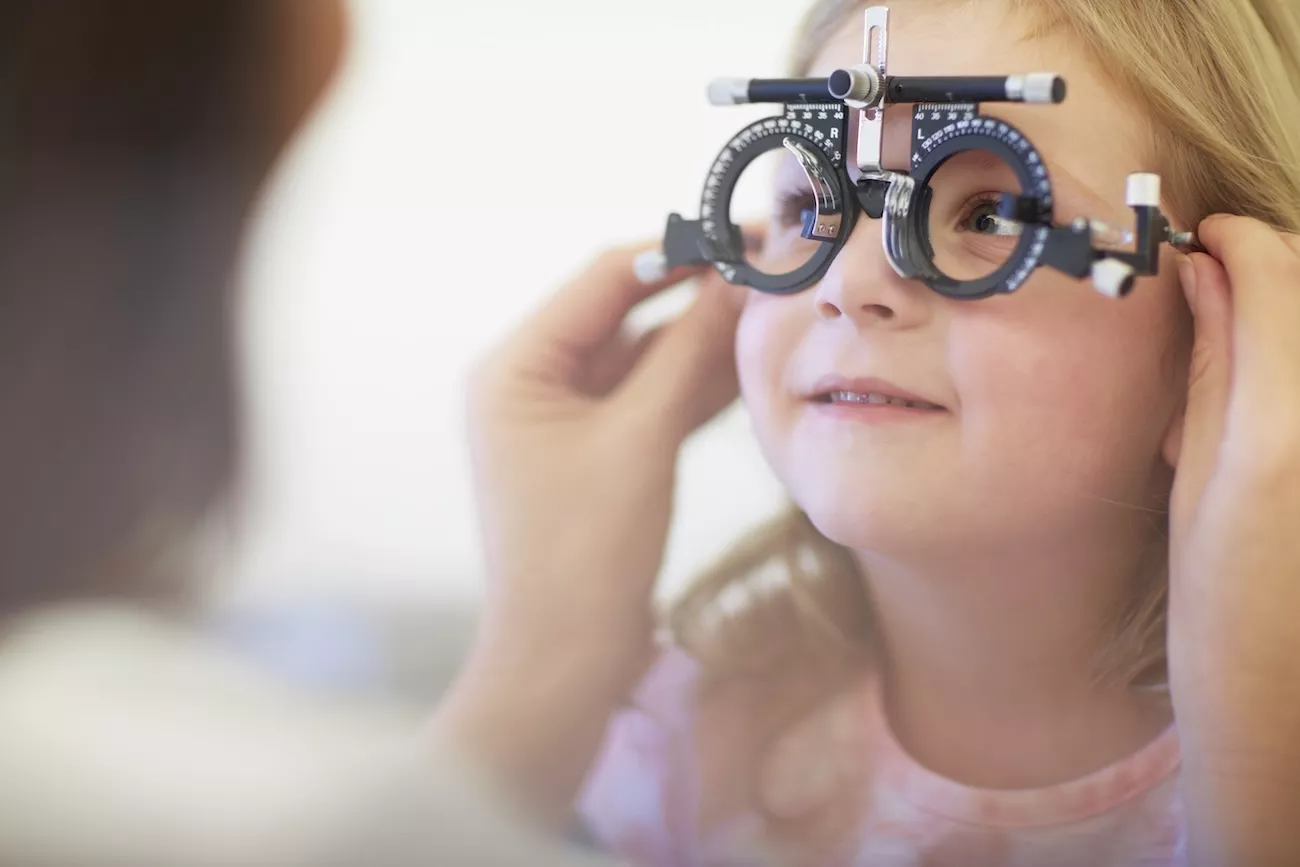
There's no need to wait until your child can read a full eye chart. Sight tests for children are designed around age and ability, using pictures, shapes, and games rather than letters for younger children, so a lack of literacy is never a barrier.
Guidance from the College of Optometrists suggests children have their first full eye examination from around age three to four, with a review every one to two years after that, unless an optometrist recommends more frequent checks. If there's a family history of squints, lazy eye, or needing glasses at a young age, it's worth mentioning this at booking, as it may mean earlier or more frequent testing is advisable.
As a general guide:
Children rarely announce that they can't see well, so it often falls to parents and teachers to notice the smaller clues. Look out for:
Any one of these on its own may be nothing to worry about. Together, or persistent, they're worth a proper look.
We know that a trip to the optician can feel daunting for a child, especially the first time. Our approach is built around making it feel like anything but a test.
During our children's eye examinations, children are given extra time, so nothing feels rushed and there's always room for a few nerves, a wobble, or simply warming up to a new environment. Depending on your child's age, the examination will typically include:
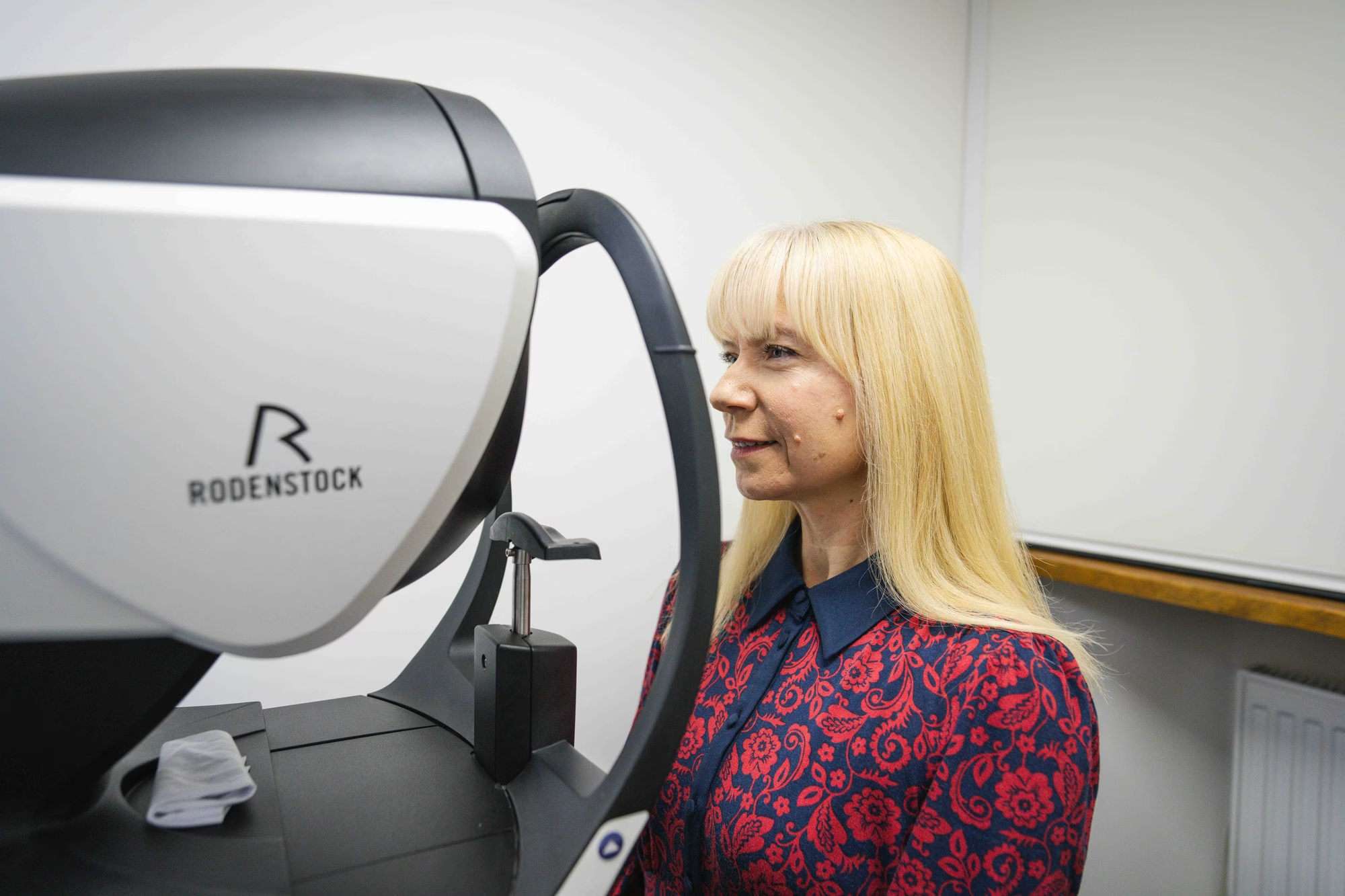
Where appropriate, we also use advanced imaging such as Optomap, which captures a wide-angle view of the back of the eye quickly and comfortably, without always requiring eye drops. For older children and teenagers who need glasses, our Rodenstock DNEye Scanner can take detailed biometric eye measurements to support more precisely tailored lens options, though this sits alongside, rather than replaces, the core sight test.
Eye tests are NHS-funded for all children and students under 19 in the UK, in line with the Opticians Act 1989. At Richard Fantom Eyecare, we allow extra time for children's appointments to make sure nothing is rushed. If you're unsure whether your child qualifies, or want to know what to expect from the appointment, our team is happy to talk it through before you book.
A little preparation goes a long way:
Generally every one to two years from around age three or four, or more frequently if recommended by an optometrist, for example where there's a family history of squints, lazy eye, or early short-sightedness.
There's no strict minimum age. Any concerns noticed by a parent, health visitor, or GP should be checked promptly. In the absence of concerns, around age three to four is a sensible time for a first full examination, as this is when many common childhood eye conditions are first identified.
Yes. Eye tests are NHS-funded for all children and students under 19 in the UK.
Not routinely. Many checks, including Optomap imaging, can be carried out without drops. Your optometrist will always explain what's involved beforehand and why, if drops are ever recommended for a specific reason.
That's completely normal, and something we see often. Our appointments allow extra time specifically for this, and our optometrists are experienced at adapting their approach to suit each child.
Healthy vision gives children the best possible start, in the classroom, on the sports field, and everywhere in between. If it's been a while since your child's last eye test, or you've noticed any of the signs above, we'd love to see you.
Get in touch with our friendly team at Richard Fantom Eyecare in Bidford-on-Avon to book your child's eye test, or to ask any questions beforehand. We're always happy to help put small minds and their parents at ease.